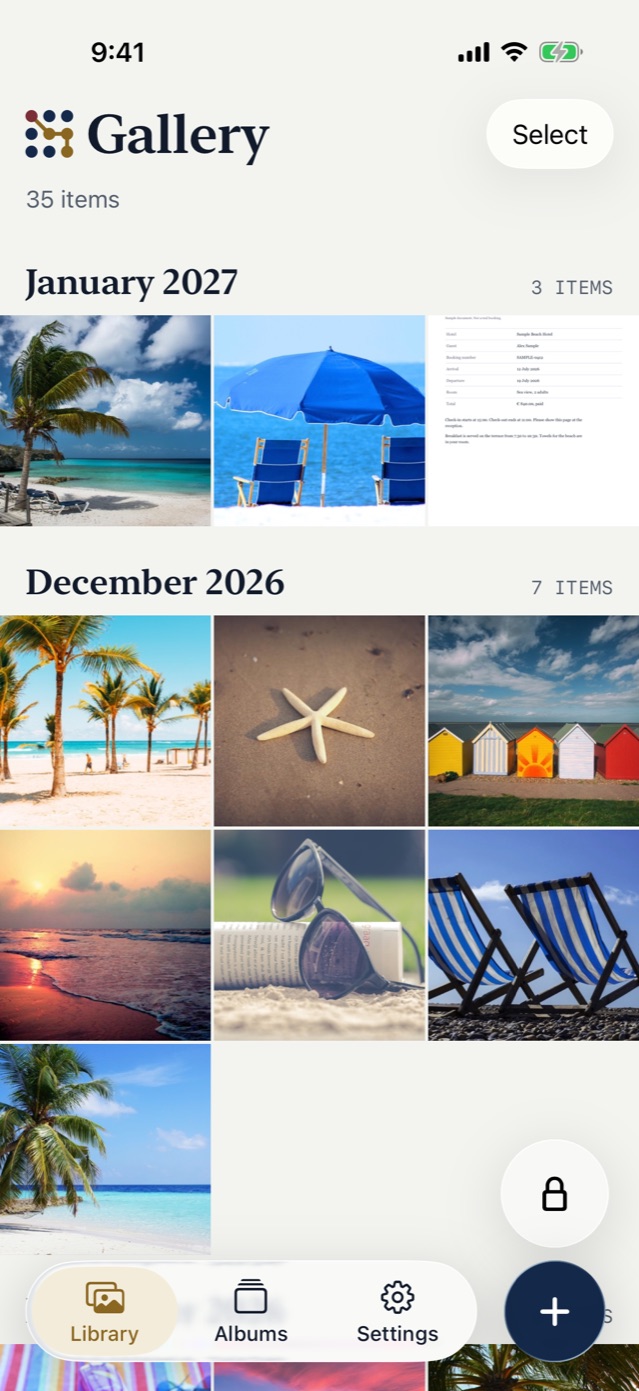
A photo lock app is also sold as a photo locker or gallery lock. It can put a PIN screen in front of your photos, encrypt the files, or do both. The store page often does not say which. You can find out with two checks.
A lock guards the door, encryption changes the file
A lock is a PIN, a password or a biometric check that the app asks for before it shows your photos. The check runs in the app. The files stay as they were.
Encryption scrambles each file with a key. Without the key, the file does not read as a photo.
An app can lock without encrypting. So the word “locked” on a store page tells you very little.
Two checks before you install
- Look for a named method. Search the store page and the website for the name of the encryption method. “Secure” and “protected” name no method. If the page gives none, we would assume it is a lock screen, because there is nothing to check.
- Read the App Privacy section on the App Store page. It lists the data types that the developer says it collects. The developer fills it in, so read it as a claim.
When a PIN screen is enough
Sometimes you only want photos out of sight while a friend scrolls through your phone. A lock screen does that. Apple’s Hidden album is a lock of this kind too, and your iPhone passcode can open it.
If the files themselves matter, pick an app that names its encryption. What to check before you trust a vault app goes further.
What we do, and where it stops
To open the vault you need your pattern or passphrase and a random Secret Key. Your iPhone keeps the key. Face ID opens it too, if you turn it on. Vault9 has no account and no servers that receive your photos or keys.
Our limits are plain:
- We cannot reset your pattern or passphrase. If it is not written on your Restore Kit, the vault is lost.
- Vault9 does not protect photos when someone holds your unlocked phone. It does not protect against malware either.
- No independent security audit has happened yet.